The Verdict of the Last Frame: Ten American Endings That Change the Film You Just Watched
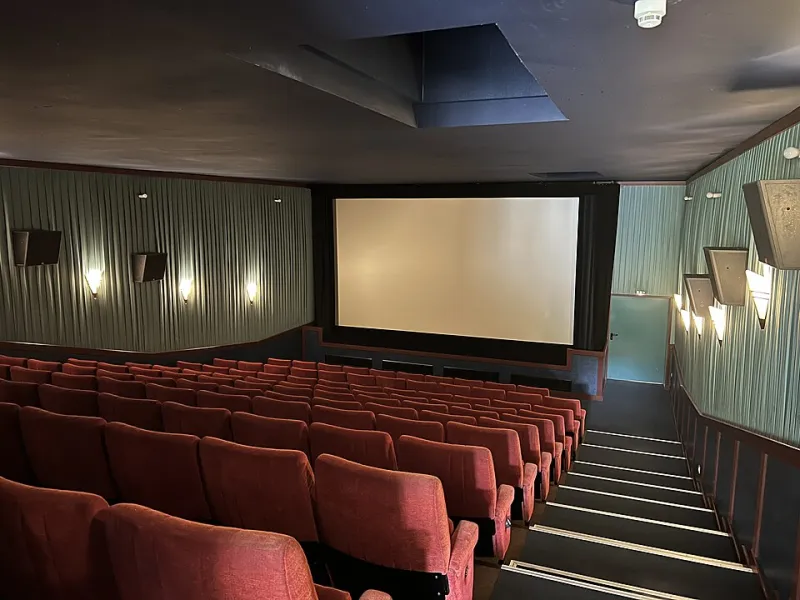
Photo: Lukas Beck, CC BY 4.0, via Wikimedia Commons
The final shot is the only part of a film that the audience is guaranteed to leave carrying. Everything else is subject to memory and argument, but the last image is the one that plays against the credits, accompanies the walk to the parking lot, and quietly reorders the two hours that came before it. A great ending does not explain. It re-contextualizes, and then it holds.
The distinction worth preserving is between resolution and resonance. Resolution closes an account. Resonance reopens one. The ten endings below, all from American films, belong to the second category. Each is described with attention to what the frame contains, how long it is held, and what it costs the viewer to sit with it.
1. The Searchers (1956) — The Doorway
John Ford's final shot is architecture as verdict. Ethan Edwards stands silhouetted in the frame of a homestead door, holding his own elbow, outside a family he has spent years restoring and can never join. The camera holds, the door closes, and Monument Valley fills the gap where a person should be. It is the rare ending that explains a character entirely without granting him a single word of relief.
2. The Graduate (1967) — The Back of the Bus
Few endings have been imitated as often and understood as poorly. Having escaped the wedding, Benjamin and Elaine sit at the rear of a bus, laughing — and then the laughter dies, and the shot keeps going. Mike Nichols refuses to cut at the moment the comedy resolves. The duration itself is the point: what the audience thought was a romantic conclusion becomes an open question about what these two people have actually chosen.
3. 2001: A Space Odyssey (1968) — The Child and the Planet
Kubrick ends on a blue planet and an enormous, unreadable infant regarding it. The composition is almost symmetrical, almost serene, and entirely without instruction. Nothing in the shot tells us what has occurred; everything in the shot insists that something has. It is the definitive argument that an ending image can operate on a viewer like a chord rather than a sentence.
4. Chinatown (1974) — The Street, Walking Away
After the gunfire and the famous instruction to forget, the camera holds on Jake Gittes and his associate walking away down a dark street as a car recedes. Nothing is framed for sympathy. The closing image offers no moral vantage point, which is precisely the horror of it: the story has ended, and the city has not noticed.
5. The Godfather (1972) — The Door That Closes
A wife watches her husband receive the homage of subordinates, and a door swings shut on her face, and the frame goes dark. The composition is a simple one — an interior, a threshold, a woman's expression — but the movement of that door converts the entire film into a statement about what Michael Corleone has agreed to lose. The last image is not violence. It is exclusion.
6. The Conversation (1974) — The Man and the Saxophone
Harry Caul sits in the wreckage of an apartment he has torn apart looking for a bug, and plays along to a jazz record. The shot is wide enough to show the ruin and close enough to hold his face. Coppola ends not on discovery but on a ritual of self-soothing, and the audience understands that the film's subject was never surveillance but isolation.
7. Se7en (1995) — The Desert, Walking Out
After the box and the shot, David Fincher cuts to an immense, indifferent landscape and lets Somerset walk away from the camera while a voiceover offers a hesitant agreement with a Hemingway line about the world. The scale of the frame diminishes the man, and the man's small persistence in it becomes the film's only consolation. It is an ending that refuses to console and manages to anyway.
8. No Country for Old Men (2007) — The Kitchen Table
Ed Tom Bell describes a dream to his wife at breakfast, finishes with the words "and then I woke up," and the film ends on a two-shot of two ordinary people at a table. No chase, no gunfire, no resolution of the plot's central mystery — only the composition of a domestic frame held long enough to function as a eulogy. The Coens trust the audience to feel the absence in the room.
9. Michael Clayton (2007) — The Taxi
Tony Gilroy ends on Michael Clayton's face in the back of a cab, the camera refusing to leave it while the credits roll over the image. Nothing happens. Everything is visible. The duration converts an ordinary reaction shot into an act of moral accounting, and the film's argument lands without a single additional line.
10. Moonlight (2016) — The Water at Night
Barry Jenkins closes by returning to a boy standing in the surf under blue light, small and unguarded, after two hours of watching that boy be hardened by the world. The final image is tender and almost unbearably quiet, and it reorganizes the film from a triptych of chapters into a single continuous act of survival.
What a Last Frame Owes the Audience
These endings share a discipline that is easy to describe and difficult to execute: each withholds the sentence the audience expects. None explains its theme, none supplies a summary, and none mistakes clarity for closure. What they provide instead is a held image — a composition, a duration, and an emotional residue that the viewer must complete.
That is the final responsibility of the closing shot. Not to tell the audience what the film meant, but to leave them in possession of a frame they cannot put down.