Between the Tentpole and the Micro-Budget: The Vanishing Case for the Adult Drama
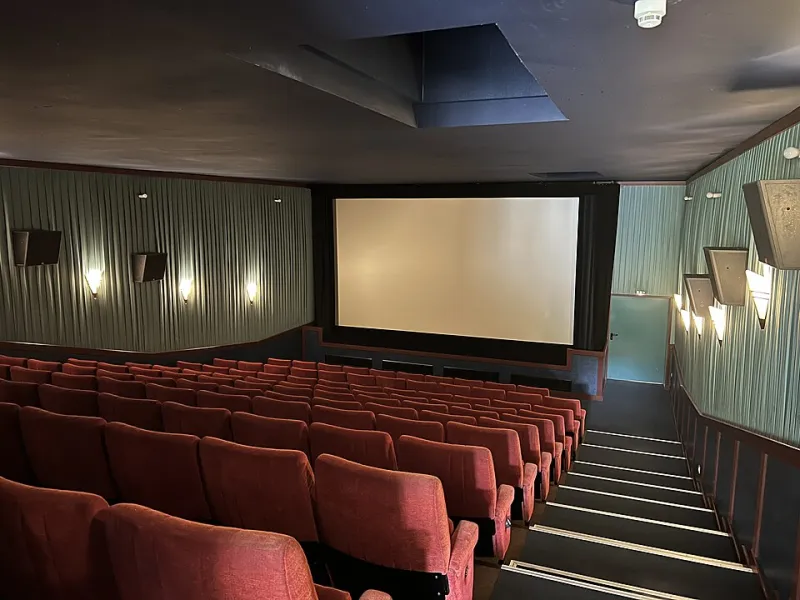
Photo: empty vintage movie theater seats atmospheric light beam, via images.pexels.com
There was a long stretch of American film history in which a movie could cost twenty-five million dollars, star two actors in their forties, contain no explosions, and open on three thousand screens. These films were not arthouse curiosities and they were not tentpoles. They were the middle — and for roughly three decades they carried an outsized share of the culture's serious conversation about adult life.
That middle has been thinning for years. As of late 2026, it is less a tier of the business than a rounding error, and the consequences for filmmakers and for audiences are only beginning to be understood.
A Category That Once Had Its Own Gravity
The seventies established the template: modestly budgeted character studies made inside the studio system, often by directors who had come out of television. The nineties industrialized it. Specialty divisions built specifically to make these films — Touchstone, Fox Searchlight, Sony Pictures Classics, Focus, October — became reliable suppliers of the movies that dominated awards season and, more importantly, the ones that people argued about in parking lots.
Those films were profitable for reasons that had little to do with opening weekend. They played for months. They sold videotapes, then DVDs, then digital copies. A drama that grossed forty million theatrically could earn several times that on the back end, which meant a studio could tolerate a soft launch. The revenue was patient. The business, for a while, could afford to be patient too.
The Arithmetic of the Missing Tier
Three forces have squeezed the middle from both ends.
The first is the collapse of the ancillary market. Home video was the subsidy that made mid-budget drama viable, and it no longer covers the cost of making one. The second is marketing. A nationwide release of any kind carries a print-and-advertising burden that is largely fixed, which means a thirty-million-dollar drama and a two-hundred-million-dollar spectacle cost roughly similar amounts to launch. Faced with that, a studio executive does not need a spreadsheet to reach a conclusion.
The third is the disappearance of the theatrical window as a meaningful second act. A film that leaves theaters in three weeks and appears on a subscription service a month later cannot build the slow, word-of-mouth audience that once turned a modest opener into a durable success.
What Streaming Did, and Did Not, Fix
Streaming did not kill the adult drama so much as relocate it and change its incentives. Platforms do commission serious films for grown-ups, and some of them are excellent. But the commissioning logic is different. A theatrical release is judged by whether people leave their homes; a streaming release is judged by whether people finish, and by what their engagement signals to a recommendation system.
That produces a subtly different kind of movie. It tends to open strong, resolve clearly, and avoid the ambiguity that keeps a viewer from pressing play in the first place. It favors casts with pre-existing familiarity and premises that can be summarized in one sentence. None of this is a conspiracy; it is a set of incentives, and incentives shape scripts long before anyone reads one.
The Careers That Do Not Get Built
The most serious cost is developmental. The mid-budget drama was the training ground for directors, writers, and actors who could not yet be entrusted with a franchise and were too experienced to be handed a five-hundred-thousand-dollar indie. It was the second rung of a ladder that has now lost its middle steps.
Consider what a career used to look like: a well-regarded small film, then a studio drama with a movie star, then — maybe — something enormous. Remove the second step and the progression breaks. Directors either stay small indefinitely or are vaulted into spectacle before they have learned how to stage a scene between two people in a room. Actors lose the roles that made them interesting between the roles that make them wealthy.
There is also a loss that is harder to quantify, which is the disappearance of the shared adult conversation. A culture that produces only event films and micro-budget debuts loses the common ground between them — the film that a curious fourteen-year-old and a skeptical grandparent might both see, and disagree about afterward.
The Counterargument, Fairly Stated
Defenders of the current arrangement make a reasonable case. Audiences, given the choice, have voted with their wallets for scale and spectacle, and the mid-budget drama's theatrical audience had been eroding for two decades before streaming arrived. The economics of the old model depended on a home video market that no longer exists and is not coming back. Nostalgia for a business model is not a strategy.
All of that is true. But it describes what has happened, not what must happen next. The mid-budget film does not require the restoration of the DVD. It requires a distribution and marketing structure that can profit from a smaller, more deliberate release — the kind of slow-build platforming that still occasionally produces a genuine sleeper — and it requires financiers willing to accept a longer horizon than quarterly reporting rewards.
Why the Middle Is Worth Defending
The strongest argument for the disappearing middle is not economic. It is that the films that occupied it did something the extremes cannot. Franchises are built to be continued, and so they cannot fully end. Micro-budget films are made outside the apparatus, and so they rarely describe what it feels like to live inside it. The adult drama was the form that took the ordinary machinery of American life — a marriage, a job, a deposition, a diagnosis — and treated it as sufficient material for art.
That is not a niche interest. It is the center of the medium's claim on seriousness. A cinema that cannot afford to make those films is not merely smaller. It is quieter in exactly the way it can least afford to be.