The Song Was Already There: Ten Needle Drops That Rewired American Cinema
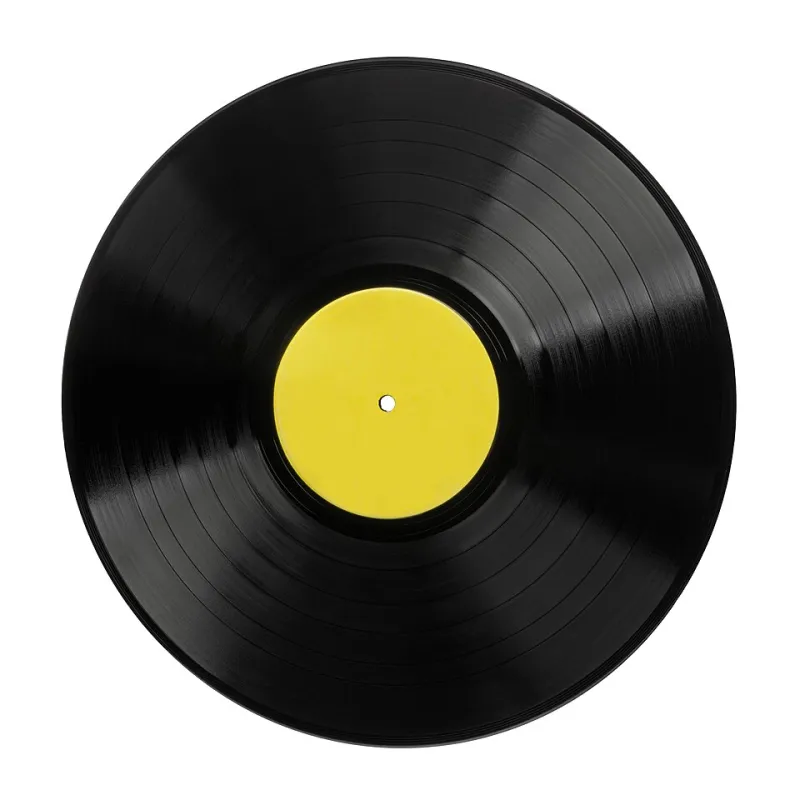
Photo: Evan-Amos, Public domain, via Wikimedia Commons
Popular music has been part of the movies since the first exhibitor dropped a record onto a turntable, but the modern needle drop — a pre-existing recording, placed with intent, allowed to be recognized by the audience — is a younger craft than its ubiquity suggests. It is also among the most difficult things a director can attempt. A score is written to serve the image. A pop song arrives with its own history, its own fans, its own associations, and a price tag to match. When the placement works, the scene inherits all of that accumulated meaning at once. When it fails, the audience hears a purchase order.
What Separates an Earned Drop From a Stunt
Three tests tend to decide the matter. First, the song must be doing labor the image cannot perform alone — supplying irony, memory, or a cultural shorthand that would otherwise require a page of dialogue. Second, the edit must respect the music's internal architecture. A track dropped in on the downbeat, allowed to breathe through a chorus, cut on the turn of a phrase, behaves differently than one faded up under a conversation. Third, the film has to be willing, for a moment, to lose the argument. The song gets to win.
Directors who understand this treat the cue sheet as a second screenplay. Those who do not tend to fall in love with a temp track in the cutting room and spend eighteen months discovering that affection is not the same as permission.
Ten Moments Where the Record Did the Work
Ranked here not by fame but by degree of inseparability — how badly the scene would collapse if the needle were lifted.
1. "Layla," Derek and the Dominos — Goodfellas (1990). Martin Scorsese takes the piano coda, that long, almost unbearably lovely figure, and lays it over the discovery of the bodies. The euphoria of the music and the horror of the image do not cancel each other out; they compound. The sequence has been imitated for thirty-five years and never equaled, because the joke is not the point. The tenderness is.
2. "Stuck in the Middle with You," Stealers Wheel — Reservoir Dogs (1992). Quentin Tarantino's most notorious placement works because the song is cheerful and the scene is not, and the film refuses to wink. Michael Madsen's dance is not a punchline; it is a demonstration of how a particular kind of violence feels to the person committing it. The jauntiness is the horror.
3. "Tiny Dancer," Elton John — Almost Famous (2000). Cameron Crowe builds an entire thesis about communal consolation into a bus singalong, and the sequence earns it because the film has spent an hour showing how badly these people need to be in the same key for once.
4. "In Your Eyes," Peter Gabriel — Say Anything (1989). The boombox is now shorthand for a gesture, but the craft is in the withholding: the music is quiet, tinny, mediated by cheap speakers, and the point is that it is not enough. It is the least triumphant romantic climax in American comedy, and that is precisely why it endures.
5. "Sister Christian," Night Ranger — Boogie Nights (1997). Paul Thomas Anderson constructs a sequence around the running time of a single record. The audience can feel the track ticking toward its end, and the tension becomes structural rather than merely dramatic. Few directors have made a song's duration so physically uncomfortable.
6. "Where Is My Mind?," Pixies — Fight Club (1999). David Fincher lets the track arrive late, after the buildings fall, and its blank euphoria reframes the apocalypse as a kind of release. The song does not comment on the ending; it rewrites what the ending means.
7. "Needle in the Hay," Elliott Smith — The Royal Tenenbaums (2001). Wes Anderson's most serious sequence is also his quietest cue. The song is allowed to be a song, not a stylistic flourish, and the film's usual decorative instincts are held in check.
8. "Bohemian Rhapsody," Queen — Wayne's World (1992). A rare case of a placement that permanently altered how a generation heard the original. The headbanging in the car is funny, but it is also sincere, and sincerity is what protects it from becoming a sketch.
9. "Son of a Preacher Man," Dusty Springfield — Pulp Fiction (1994). The song plays diegetically, from a stereo in a house that is about to become a trap, and its warmth turns the room into something seductive and wrong. Tarantino's real gift was never coolness; it was atmosphere built from other people's records.
10. "Just Dropped In (To See What Condition My Condition Was In)," Kenny Rogers and the First Edition — The Big Lebowski (1998). A dream sequence that could have been merely absurd is instead genuinely psychedelic, because the song's own weirdness is trusted rather than ironized.
What the Drop Costs
The economics of this craft are rarely discussed and shape the art more than most critics admit. Clearances can run into six figures for a well-known master recording, and a single refusal can force a director to abandon a sequence that has been cut to a track for a year. The result is a quiet hierarchy: established filmmakers get the songs, and everyone else gets library music that sounds almost, but not quite, like what they wanted.
That constraint is not always bad for the work. It has produced some of the most inventive scored sequences in contemporary cinema. But it does mean that the needle drop, as a device, is partly a function of leverage — and that the history of American film music is also a history of who could afford to say what they meant.
After the Needle Lifts
The best of these moments share a quality that is hard to name and easy to feel. They do not use a song to tell us how to feel about a scene. They use it to tell us something the scene could not say on its own — that a character is younger than they look, that a decade has ended, that a room is full of people who will never be in the same room again. That is not decoration. That is direction.