Furnished Evidence: How Production Design Argues Before Dialogue Arrives

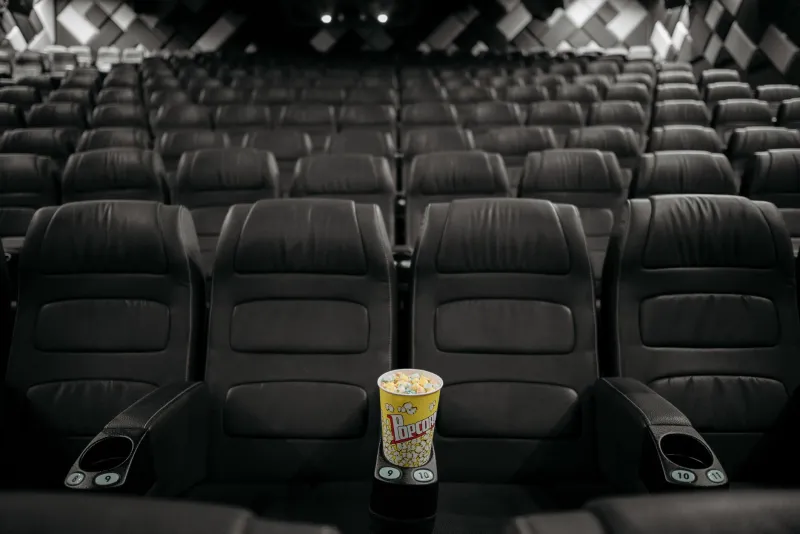
Photo: Andrew Walker, CC BY-SA 2.0, via Wikimedia Commons
Before a single line of dialogue can land, a room has already spoken. It has said whether the people inside it are comfortable, whether they are being watched, whether they are pretending. An audience absorbs this within seconds of a scene's first frame — usually without noticing — and then spends the rest of the film measuring what is said against what the space has already told them. Production design is the one craft in cinema that argues its case in complete silence, and it remains the discipline most often praised in passing and understood least.
The Biography of a Room
Every designed space on screen is a character with a past. The designer's real task is not decoration but chronology: to decide what happened in this room before the camera arrived, and to leave credible evidence of it. The scratches on a doorframe, the second-best sofa, the picture hung too high because no one in this house has ever owned a ladder — these are not texture for its own sake. They are testimony.
Consider the study in The Godfather, a room built for negotiation and surveillance at once: heavy wood, drawn blinds, a desk positioned so that whoever sits behind it controls the light and whoever sits in front of it controls nothing. Nothing in that room is neutral, and nothing in it is explained. Or consider the Los Angeles of Chinatown, where the city's dryness is not atmosphere but argument — brown lawns, dry riverbeds, water moving toward money. The design does the work a lesser film would assign to a speech.
The distinction that separates accomplished work from merely handsome work is whether the space answers to the character or to the camera. A set dressed for the camera produces frames that photograph beautifully and mean little. A set dressed for the character produces a room that resists the camera in interesting ways — the chair that blocks a sightline, the counter that forces two actors apart.
Class Encoded in Square Footage
Space is money, and American cinema has always understood the arithmetic. The width of a hallway, the height of a ceiling, whether a person must turn sideways to pass another in a kitchen: these are class markers as reliable as any line of dialogue, and considerably harder to fake. A film about ambition is, in a strictly physical sense, a film about floor plans.
The past two decades of American independent film have made a virtue of the real location. Working apartments are small because they are real, but the finest of these productions convert constraint into meaning, letting the cramped frame press on the characters until the audience feels the pressure as their own. The reverse is equally instructive: films about wealth that use actual rooms rather than rented grandeur tend to feel more dangerous, because real money has an indifference to it that no set decorator can manufacture.
Objects as Testimony
A prop earns its place by recurrence. If the camera returns to an object twice, the audience begins constructing a theory about it, and the designer has effectively written a sentence without a writer. The discipline lies in resisting the third return, which is where a film stops trusting its audience and begins pointing.
Some of the most consequential props in American movies are pieces of paper that no one in the theater can read. Their function is to be handled with the correct reluctance, folded with the correct impatience, or left on a table for one beat too long. Prop departments do their finest work in the knowledge that it will go unseen, and that the actor will feel the difference anyway.
The Partnership Behind the Wallpaper
The romantic account of authorship has done lasting damage to this craft by assigning every visual decision to the director. In practice, the strongest work emerges from long collaborations in which the designer functions as a dramaturg working in three dimensions — reading the script for what it cannot say and proposing spaces that make the unspoken visible. When that partnership is healthy, the design evolves during production. When it is not, the rooms arrive as illustrations of a script rather than arguments with it.
The increasing reliance on previsualization has complicated this. Digital planning can protect a budget, but it also risks settling questions that are better answered on the day, with actors standing in the space and discovering what the room wants from them. The best-designed films tend to carry visible traces of that discovery.
The Discipline of the Unremarked
Over-design is a form of lecturing. A room that announces its themes — the obvious metaphor hanging above the obvious metaphor — flatters the audience rather than trusting it. The corrective is restraint: the room the audience could describe afterward without being able to say precisely why they remember it.
This is the paradox of the craft. Production design is judged most highly when it disappears into the story it is telling, which means its practitioners are habitually congratulated for work the audience believes simply happened. The designer's name is the one most moviegoers never learn, and the rooms they build are the ones the audience never forgets.