The Credits Are the Overture: In Defense of the Movie Title Sequence
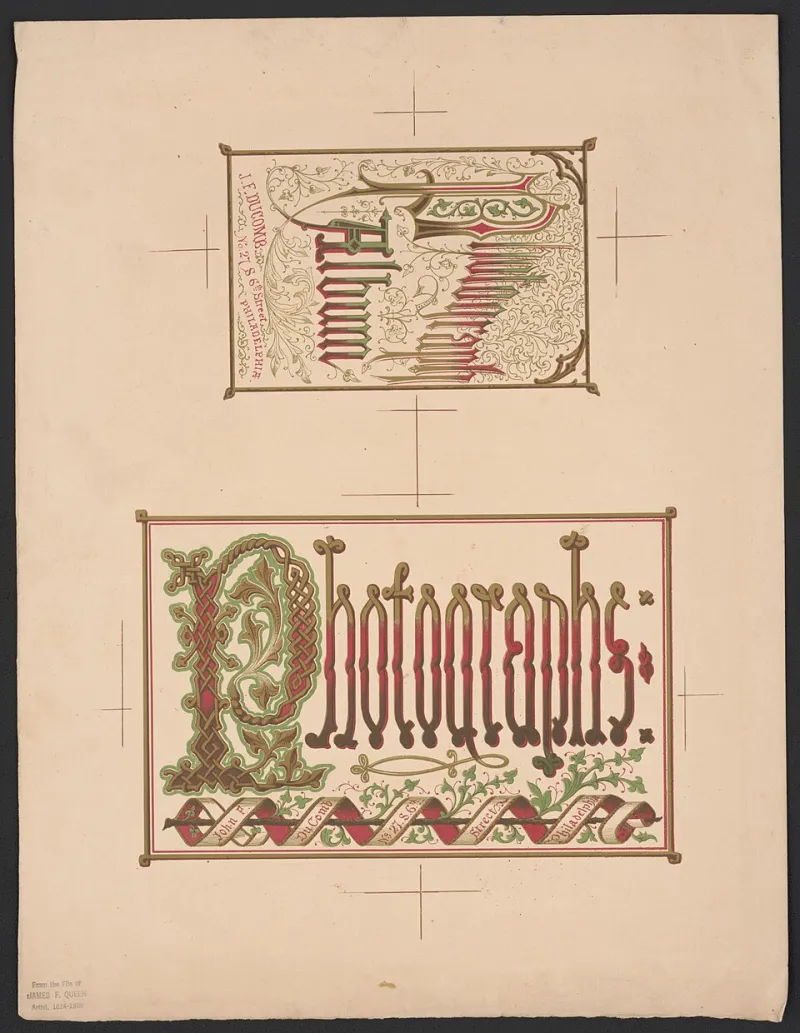
Photo: Queen, James Fuller, 1820 or 1821-1886, artist, Public domain, via Wikimedia Commons
Before the first scene, a film has an unusual opportunity: it can speak to the audience in a register that the story itself never uses. The title sequence is the only passage in a feature where pure design, pure music, and pure motion are permitted to carry the entire burden. It is the closest commercial cinema comes to the condition of the overture, and for roughly three decades it was treated as a genuine craft with its own practitioners, vocabulary, and stars.
That tradition has not vanished, but it has retreated. Understanding what was lost requires looking at how the sequence came to matter in the first place.
A Craft With a Lineage
The modern title sequence is largely a mid-century invention, and its founding figure was a graphic designer who thought like a director. Saul Bass approached the opening of a film as a compressed thesis: the jagged bars of The Man with the Golden Arm, the vertiginous spiral of Vertigo, the fragmented typography of Psycho. Each was made of flat shapes and moving type, and each told you something true about the film that followed without showing you a single frame of it.
Bass was not alone. Maurice Binder turned the James Bond openings into a genre unto themselves. Robert Brownjohn layered projections onto live bodies for Goldfinger. Pablo Ferro brought a frantic, hand-lettered energy to Dr. Strangelove. Richard Greenberg's creeping, line-by-line reveal for Alien remains one of the most effective pieces of dread ever assembled in a title card.
The tradition continued into the digital era. Kyle Cooper's work on Se7en in 1995 is generally credited with reviving the form's reputation, and it proved that the sequence could be disturbing rather than elegant. Catch Me If You Can demonstrated, at the turn of the millennium, that an animated sequence with a full orchestral score could be more eloquent than a conventional cold open.
What the Sequence Can Do That a Cold Open Cannot
A cold open drops the audience into a scene and asks them to catch up. A title sequence does the opposite: it establishes a frame of mind before the narrative begins to make demands.
This is a formal advantage, not merely a decorative one. The sequence can establish tone, period, geography, and thematic preoccupation while the audience is still settling into their seats — a state of attention that is more suggestible than at any other point in the film. It can also signal authorship. A director who commissions bespoke work is making a claim about the seriousness of the enterprise, in the same way that a distinctive score or a preferred aspect ratio does.
And there is an argument from rhythm. Films need a moment of arrival. The sequence supplies one without costing narrative real estate, functioning as a held breath between the world outside the theater and the world inside the frame.
The Skip Button Problem
Streaming has been unkind to the form, and largely for structural reasons. When a film opens on a platform, the first minutes are the most fragile. Every second before the story begins is a second in which a viewer may leave, and the interface actively encourages them to. The skip control has trained a generation to regard an opening sequence as an obstacle standing between them and the content.
The industry has accommodated this. Main titles have migrated to the end crawl with increasing frequency, leaving a few stark cards at the front. Sequences are now often compressed into the first scene rather than occupying their own space, or delivered as a brief graphic treatment folded into the studio logos. There are notable exceptions — a handful of recent studio films and animated features still commission elaborate, graphic-driven openings — but they read as deliberate gestures rather than as default practice.
The Case for Commissioning Real Work
The counterargument is easy to make: the sequence costs money, delays the story, and the audience skips it. But each of those claims deserves scrutiny. The cost of a well-made sequence is small relative to any other department on a studio film. The delay is a matter of ninety seconds. And the audience skips it because the sequence, in most contemporary films, gives them no reason to stay — a few names over a landscape or a slow pan is not a title sequence, it is a placeholder.
Directors who care about the form have shown what happens when the audience is given a reason. Baby Driver timed its opening credits to a single track, turning the sequence into a statement of method. Bass's work is still studied in design schools six decades on precisely because it was conceived as cinema rather than as stationery.
The First Ninety Seconds
A title sequence is the only place in a film where the audience is asked to look without being told what to feel — where composition, typography, and music do the work of exposition. Treating that space as an afterthought is a small economy with a large cost. It tells the audience, before the story has begun, that the margins of the form are not worth the effort.
There are filmmakers who still believe otherwise, and their openings are usually the first evidence of it. The credits, handled properly, are not the preamble to the movie. They are the first passage of it, and they deserve the same attention as any shot that follows.