Depth as Language: How America's Finest Cinematographers Are Rebuilding the Layered Frame
The history of cinema's visual intelligence can be mapped, in part, through its relationship to depth. From the deep-focus compositions of Orson Welles and Gregg Toland in Citizen Kane to the compressed telephoto flatness that defines so much of contemporary streaming content, the question of how a frame organizes space has always been a question about what filmmakers believe cinema is for.
Today, that question is being answered with renewed ambition by a generation of cinematographers who regard the layered, multi-planar composition not as a nostalgic affectation but as the most honest visual language available to them. They are building frames the way architects design buildings—with deliberate attention to what occupies each zone of space and how those zones speak to one another.
The Flattening Problem
To understand why compositional depth matters, it is necessary to first understand the forces working against it. The proliferation of content produced for small screens has encouraged a filmmaking grammar that privileges legibility over complexity. Close-ups are efficient. They read clearly on a phone, a laptop, a television. They deliver emotional information directly, without requiring the viewer to parse spatial relationships or distribute attention across the frame.
The result, in much of contemporary American film and television, is a visual environment of remarkable sameness. Faces fill the screen. Backgrounds blur into irrelevance. The frame becomes a delivery mechanism for performance rather than a constructed environment with its own expressive logic. There is nothing inherently wrong with a close-up. The problem arises when it becomes the only tool in the kit—when the language of cinema collapses to a single register.
Against this tendency, the cinematographers reclaiming spatial depth represent something more than a stylistic preference. They are making an argument about the intellectual and emotional possibilities of the medium itself.
Three Planes, Three Stories
The classical principle of layered composition holds that a well-constructed frame can carry simultaneous narratives across its three primary spatial zones. The foreground anchors the immediate dramatic action. The middle ground contextualizes it—placing characters in relation to their environment or to one another. The background introduces information that complicates, enriches, or quietly contradicts what the foreground presents.
When these three planes are managed with precision, the viewer's eye becomes an active participant in the construction of meaning. The film does not tell you where to look. It builds a world complex enough that looking—genuinely, carefully looking—becomes a rewarding act in itself.
Joanna Kulig's presence in the background of multiple scenes in Pawel Pawlikowski's Cold War (2018), shot by Lukasz Zal, demonstrates this principle with extraordinary economy. The film's black-and-white, Academy-ratio compositions repeatedly position its central figures in sharp foreground focus while the world they inhabit—cafes, concert halls, border crossings—recedes into a background that is never merely decorative. The spatial tension between the intimate and the historical is the film's subject, and the layered frame is its primary means of expression.
American Practitioners of the Deep Frame
Within American cinema specifically, the commitment to compositional depth has found its most eloquent recent practitioners among a group of cinematographers working across genres and budgets.
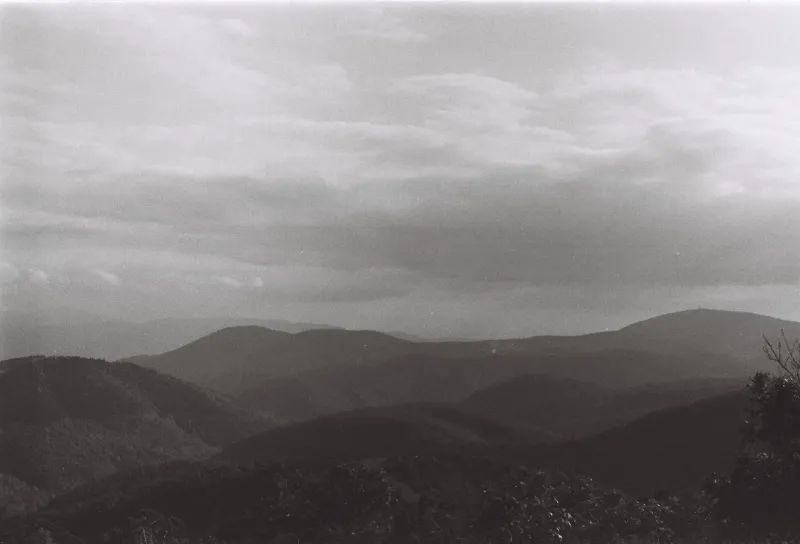
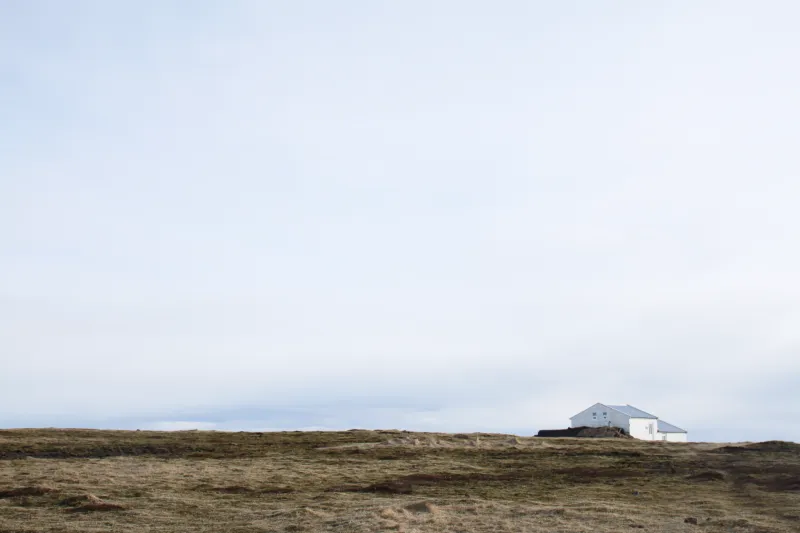
Lol Crawley's work on Calm with Horses (2020) and his collaboration with director Francis Lee on Ammonite (2020) consistently exploits the relationship between foreground figures and the vast, indifferent landscapes behind them. The spatial contrast is not merely picturesque. It encodes meaning about isolation, historical constraint, and the smallness of individual desire against geological time.
Roger Deakins, whose career constitutes one of the great sustained arguments for the intelligence of the composed frame, continues to work at the intersection of depth and precision. His cinematography for The Goldfinch (2019) and Empire of Light (2022) demonstrates how a foreground object—a painting, a hand, a slant of winter light—can function as a visual thesis statement for everything that unfolds in the planes behind it. Deakins does not use depth to show off. He uses it to think.
Among younger cinematographers, Autumn Durald Arkapaw's work on Licorice Pizza (2021) deserves particular attention. Shooting on film for director Paul Thomas Anderson, Arkapaw embraces the full spatial range available to her—wide angles that pull characters into environments, compositions that allow action in the foreground and background to unfold simultaneously, a constant awareness of how the frame's depth can carry dramatic irony. A character can be happy in the foreground while something troubling assembles itself at the back of the shot, and the viewer who is paying attention will feel the dissonance before the story confirms it.
Spatial Storytelling as Directorial Intelligence
The cinematographer works in service of a director's vision, but the decision to embrace compositional depth reflects a shared commitment between the two. Directors who understand spatial storytelling do not hand their cinematographers a shot list of close-ups and coverage. They think in environments. They ask what the world around their characters is doing at every moment, and they build frames in which that world is as expressive as the faces at its center.
This is the distinction that separates the merely competent from the genuinely masterful. A competent film covers its scenes. A masterful film constructs its scenes—builds them as spatial arguments in which every plane carries weight, every zone of the frame is purposeful, and the viewer's wandering eye is not a problem to be corrected but an intelligence to be engaged.
The Frame as Architecture
There is an analogy worth pursuing between the layered cinematic frame and the designed interior space. A great room—in a home, a cathedral, a public building—organizes the visitor's experience through the deliberate placement of objects, light sources, and spatial divisions. The eye moves through the space along paths the designer has anticipated and prepared. The experience of being in the room is inseparable from the experience of reading it.
The cinematographers restoring depth to the American frame are engaged in precisely this kind of spatial design. They are building rooms for audiences to inhabit, not surfaces for audiences to consume. The close-up has its place in that architecture—but only as one element among many, not as the whole structure.
Cinema that thinks in depth asks more of its viewers. It requires attention, patience, and a willingness to look at the whole frame rather than the most obvious point within it. In return, it offers something that flat, close-up-heavy filmmaking cannot: the sensation of being inside a fully realized world, where meaning accumulates in all directions simultaneously, and the act of watching becomes indistinguishable from the act of understanding.