The Power of Absence: How Restraint in Visual Composition Is Defining a New Era of American Independent Cinema
Consider a single image from Kelly Reichardt's First Cow (2019): a man and an ox regarding one another in the grey light of the Oregon frontier, the frame unhurried, the composition almost aggressively still. Nothing is announced. No score underlines the moment's significance. The camera simply waits, and in that waiting, something accumulates — a quality of attention that feels, in the context of contemporary American cinema, almost radical.
This is the aesthetic of deliberate absence, and it is reshaping independent and auteur filmmaking with a quiet insistence that stands in pointed contrast to the visual maximalism of mainstream Hollywood production. Where the blockbuster tradition demands that every frame be saturated with information, movement, and stimulation, a growing body of American independent cinema is finding its power precisely in what it withholds.
The Frame as Negative Space
In visual art, negative space refers to the empty or unoccupied areas surrounding a subject — the space that is not the thing, but that gives the thing its shape and meaning. Minimalist cinematography operates on an analogous principle: the deliberate emptying of the frame, the refusal to fill every corner with compositional incident, creates a kind of visual breathing room that invites the audience into a more active, interpretive relationship with the image.
Reichardt's longtime collaborator, cinematographer Christopher Blauvelt, has described their shared approach as one of finding the frame that contains only what is absolutely necessary. This is not laziness or economy of budget — it is a rigorous aesthetic discipline, one that demands a thorough understanding of what can be removed from an image before it ceases to communicate.
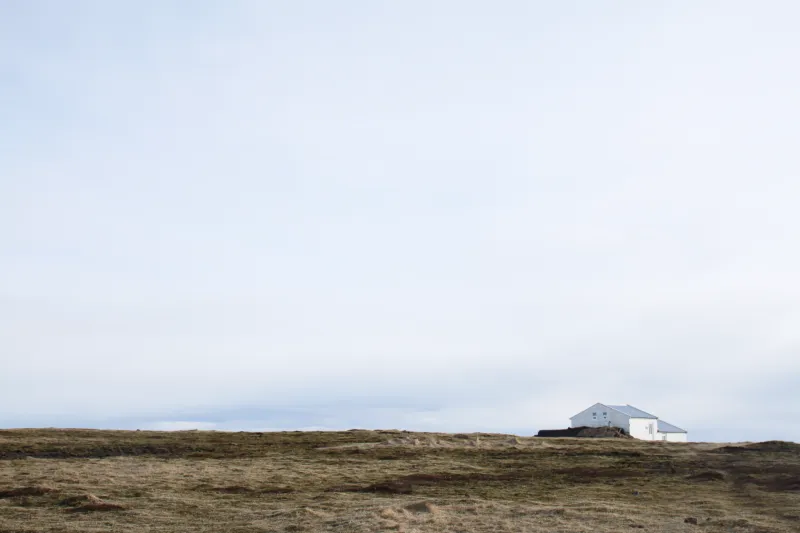
The results are images that feel unlike almost anything produced within the studio system. In Certain Women (2016), Reichardt and Blauvelt compose the Montana landscape as a character in itself — vast, indifferent, and beautiful in a way that refuses the picturesque. The wide, static shots do not frame the landscape to flatter it; they use it to dwarf the human figures within it, communicating isolation and quiet desperation through proportion alone.
Sean Baker and the Democratic Gaze
If Reichardt's minimalism is rooted in landscape and stillness, Sean Baker's visual restraint operates in a more social register. Films like Tangerine (2015) and The Florida Project (2017) deploy a similarly spare visual philosophy in service of subjects — sex workers, unhoused families, marginalized Americans — who are rarely afforded unhurried, dignified screen time.
Baker's cinematography, often achieved with small crews and available light, produces images that feel observed rather than constructed. The muted, slightly overexposed palette of The Florida Project — all bleached pastels and the particular flatness of Central Florida sunlight — refuses the glamorization that conventional Hollywood cinematography would impose. The purple-painted motel walls are not ironic commentary; they simply are what they are, and the camera's refusal to editorialize through dramatic lighting or loaded composition is itself an ethical statement.
This is a crucial dimension of minimalist cinematography that is often underappreciated in purely aesthetic discussions: restraint in visual composition can function as a form of respect. The decision not to aestheticize poverty, not to impose a beautiful frame on a difficult subject, is a moral as much as an artistic choice.
Silence as Dramatic Architecture
Minimalist cinematography rarely operates in isolation. It is almost invariably accompanied by a spare approach to sound design and dialogue — a willingness to let silence occupy the frame with the same confidence as image.
Chloé Zhao's early films, particularly Songs My Brothers Taught Me (2015) and The Rider (2017), exemplify this integration. Shot on the Pine Ridge Reservation in South Dakota with non-professional actors and natural light, these films achieve a visual and sonic quietude that feels genuinely earned rather than affected. The camera lingers on faces and landscapes with an equanimity that communicates trust — trust in the subject, and trust in the audience's capacity for sustained attention.
This trust is, in itself, a form of visual argument. Minimalist cinema implicitly challenges the assumption, so pervasive in mainstream American filmmaking, that audiences require constant stimulation to remain engaged. It proposes instead that viewers are capable of — and indeed hungry for — images that ask something of them, that do not pre-digest their emotional content.
Contrast and the Blockbuster Standard
To fully appreciate the significance of minimalist cinematography, it is useful to consider what it is reacting against. The dominant visual language of contemporary American blockbuster filmmaking is one of relentless compositional density: every frame packed with information, movement perpetually in the foreground, color grading that heightens contrast to the point of abstraction, and editing rhythms calibrated to prevent any moment of stillness.
This visual philosophy is not without its own legitimate pleasures and achievements. But it establishes a set of audience expectations — for stimulation, for legibility, for constant emotional guidance — that minimalist filmmakers systematically refuse to satisfy. The sparse frame, the long take that refuses to cut, the muted palette that declines to signify — these are not failures of production value. They are conscious rejections of a visual grammar that has come to feel, to discerning viewers, increasingly coercive.
The contrast illuminates something important about what minimalist cinematography achieves: it restores to the audience a degree of interpretive agency. When a film does not tell you how to feel through saturated color and accelerated editing, you must bring something of yourself to the image. The viewing experience becomes collaborative rather than passive.
The Intimacy of the Unadorned Image
There is a paradox at the heart of minimalist cinematography that its practitioners understand intuitively: the stripped-down image is frequently the more intimate one. By removing the apparatus of conventional cinematic beautification — the flattering light, the composed frame, the score that tells you this moment matters — these filmmakers create images that feel closer to lived experience than the polished surfaces of mainstream cinema.
This intimacy is not incidental. It is the goal. When Reichardt's camera holds on a face without the support of musical underlining or editorial urgency, the audience must close the distance themselves. The emotional experience that results is more genuinely felt because it is more genuinely earned.
For American cinephiles seeking an alternative to the visual abundance of franchise filmmaking, minimalist cinematography offers something increasingly rare: the invitation to look slowly, to sit with difficulty, and to find in the unadorned image a beauty that does not announce itself but accumulates, quietly and irresistibly, over time.