The Silent Conductor: How the Edit Suite Becomes Cinema's Most Powerful Instrument
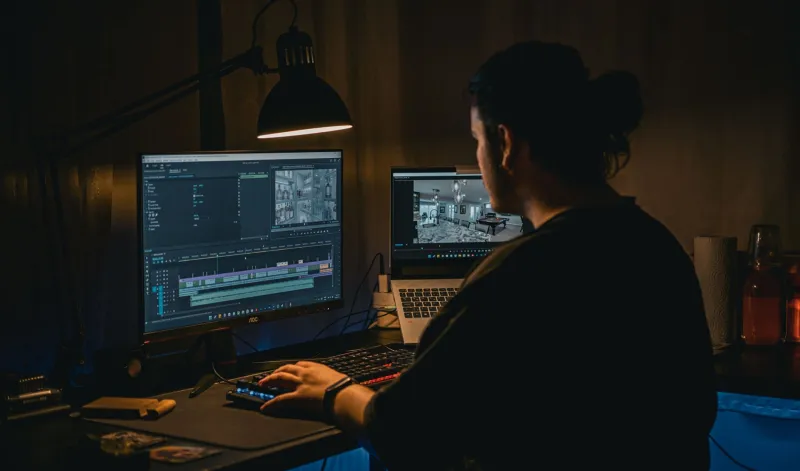
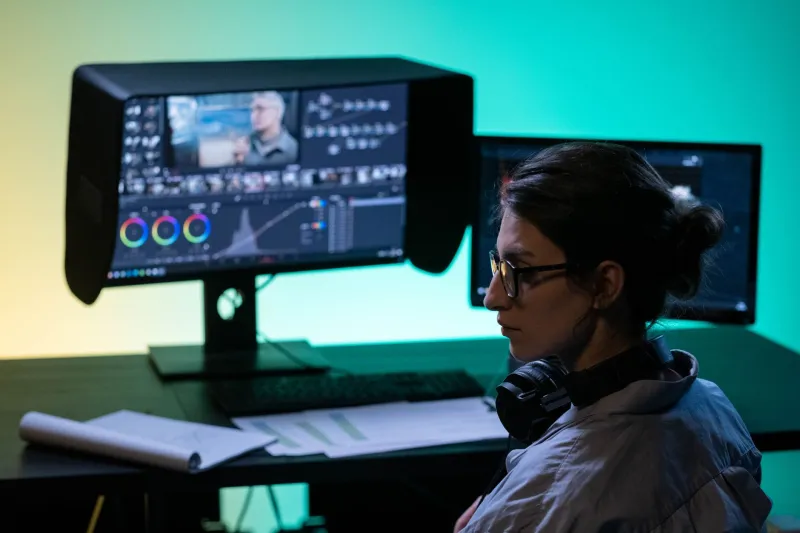
There is a persistent mythology surrounding the director as the singular auteur of cinematic experience—the figure whose vision, taste, and authority shape every frame audiences encounter. Yet anyone who has spent serious time studying the craft understands that the edit suite harbors an equally sovereign creative force. The editor, working in relative obscurity behind banks of monitors and timeline software, functions as something closer to a conductor than a technician: interpreting raw material, imposing structure, and ultimately determining the emotional tempo at which a film breathes.
Rhythm, in this context, is not a metaphor. It is a measurable, deliberate construction—one that operates on audiences at a nearly physiological level, accelerating pulse during sequences of tension and inducing a kind of meditative stillness during moments of grief or wonder. The finest editors in American cinema have understood this for decades. What separates their work from competent assembly is precisely the same quality that distinguishes a great orchestral conductor from a merely adequate one: the capacity to hear what the material wants to become, rather than simply what it appears to be.
When the Cut Becomes the Performance
Consider the editorial architecture of films where the cutting pattern itself generates meaning that neither the screenplay nor the photography could produce in isolation. Thelma Schoonmaker's collaboration with Martin Scorsese represents perhaps the most extensively studied example in American cinema. Her work on Raging Bull demonstrates how the rhythm of violence—the staccato brutality of the fight sequences juxtaposed against the languorous, almost elegiac passages of domestic life—creates a moral argument that the images alone cannot articulate. The editing does not merely pace the story; it delivers a verdict.
This distinction matters enormously. A director may conceive a scene with precise intentions, and a cinematographer may execute those intentions with extraordinary skill, yet the editor retains the final authority over what an audience actually experiences. Footage that appears unusable in isolation frequently becomes indispensable within a rhythmic sequence. Performances that seem flat on their own acquire emotional dimensionality when cut against the right counterpoint. The edit suite, in this sense, functions as the instrument through which all other instruments are finally tuned.
Tempo as Emotional Architecture
The concept of editorial tempo extends well beyond the simple measurement of cuts per minute. Sophisticated editors manipulate time through a range of techniques that include the strategic use of held frames, the deliberate withholding of expected cuts, and the precise calibration of sound design against visual rhythm. When an editor chooses to linger on a face several beats longer than convention dictates, the discomfort or tenderness that accumulates in that extended moment is entirely an editorial construction—a choice made in the suite, not on the set.
Walter Murch, whose theoretical writings on editing have become foundational texts for serious students of cinema, articulated this principle with characteristic precision: the cut is justified when it occurs at the moment the audience is ready to move, and not a frame before or after. This sounds deceptively simple. In practice, identifying that precise moment requires an almost musical sensitivity to the internal logic of a scene—an understanding of when an emotional note has fully resonated and when the next phrase must begin.
The implications for performance are equally significant. Some of the most celebrated acting moments in American film history derive their power not from what was captured on set but from how the editor chose to present it. A close-up held two seconds longer than comfortable transforms competent acting into something that feels revelatory. A cut away at the precise moment of emotional release forces audiences to complete the experience internally, creating a participation in the film's meaning that passive viewing cannot achieve.
The Invisible Architecture of Transcendence
What separates films that audiences describe as merely good from those they carry with them for years is frequently this question of rhythmic architecture. The films that achieve genuine transcendence—that produce the particular kind of emotional and intellectual expansion that cinema at its finest can generate—almost invariably demonstrate exceptional editorial intelligence. They breathe at exactly the right rate. They know when to accelerate and when to hold. They understand that silence and stillness, within the context of a carefully constructed rhythm, carry as much expressive weight as any image.
Paul Thomas Anderson's films offer a compelling case study in this regard. The editorial work across his filmography consistently demonstrates a willingness to violate conventional rhythm in service of emotional truth. There Will Be Blood, cut by Dylan Tichenor, employs extended passages of near-silence and deliberate pacing that create an almost geological sense of time—appropriate for a film concerned with extraction, patience, and the slow accumulation of obsession. The rhythm of the editing is not incidental to the film's meaning; it is the primary vehicle through which that meaning is delivered.
Conducting Without a Baton
The analogy to musical conducting is instructive precisely because it illuminates what editors actually do rather than what they are popularly imagined to do. A conductor does not create the notes; the composer has already done that. A conductor does not play the instruments; the musicians handle that responsibility. What a conductor does is interpret the relationship between all of these elements in real time, making thousands of micro-decisions about emphasis, timing, and dynamic range that collectively determine whether a performance achieves its full expressive potential.
Editors operate under analogous constraints and with analogous authority. The screenplay exists. The footage exists. The performances exist. What the editor determines is how all of these elements speak to one another across time—which moment follows which, how long each beat sustains, where the film breathes and where it holds its breath. This is not assembly. It is interpretation at the highest level of craft.
The American film industry has historically undervalued this contribution, a tendency reflected in how rarely editors achieve the public recognition extended to directors, cinematographers, and performers. Yet audiences experience the editor's work more directly and more continuously than almost any other creative contribution. Every cut is a decision about what the audience feels next. Every held frame is a choice about how deeply they are permitted to enter a moment. The rhythm of a film is not a byproduct of other decisions; it is itself the primary creative act through which cinema becomes something more than recorded performance.
Celebrating the Craft
For cinephiles genuinely committed to understanding what cinema can achieve at its highest levels, developing sensitivity to editorial rhythm represents one of the most rewarding analytical practices available. Watching a film with conscious attention to its temporal structure—noting where cuts arrive and where they are withheld, observing how rhythm shifts between sequences, recognizing the deliberate construction of pace—transforms the viewing experience from passive reception into active engagement with one of cinema's most sophisticated arts.
The edit suite, in the end, is where a film discovers what it actually is. Directors bring vision; cinematographers bring light; performers bring truth. Editors bring all of these elements into coherent, rhythmic, emotionally purposeful form. They are the silent conductors, and their instrument is time itself.