The Case for the Pause: Restoring the Intermission to the American Moviegoing Ritual
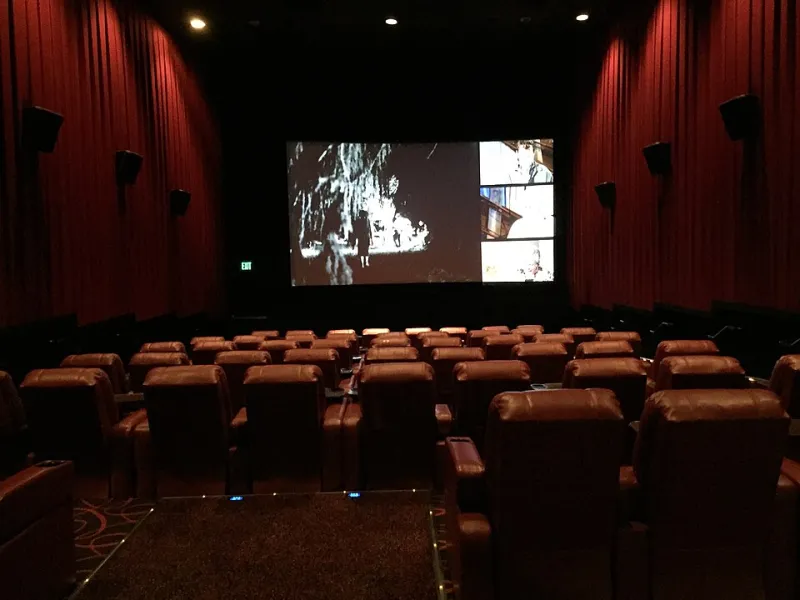
Photo: Famartin, CC BY-SA 4.0, via Wikimedia Commons
American moviegoing has spent the past decade treating duration as a problem to be managed. In 2026, however, the three-hour prestige release is no longer an outlier but a recurring feature of the exhibition calendar, and the old question has returned with unusual force: when, exactly, should a film ask its audience to sit still for another hour? The intermission—long dismissed as a relic of roadshow exhibition—deserves a serious second look. It is not merely a convenience for the restless or the thirsty. Used with discipline, it is a formal tool, capable of shaping pace, concentrating attention, and restoring a sense of occasion to the American movie theater.
The Intermission Was Never Merely Practical
For much of the twentieth century, the intermission was an ordinary part of the motion-picture experience. Roadshow engagements of Gone with the Wind, Lawrence of Arabia, and 2001: A Space Odyssey treated the break as part of the presentation, a built-in interval that allowed the audience to absorb what it had seen before surrendering to what came next. The practice faded for understandable reasons: multiplex economics, shorter attention cycles, and the desire to maximize daily showtimes. But the disappearance of the intermission also removed a structural beat from the theatrical experience. What was once a pause became dead time, and what had been ritual became mere delay.
The distinction matters. An intermission is not simply a stoppage. It is an editorial decision made visible, a moment when the film acknowledges the audience as a body with needs, schedules, and conversations. In an era when theaters are seeking reasons to justify the trip, that acknowledgment is not a weakness. It is an asset.
Pacing Is Notoriously a Matter of Architecture
Filmmakers speak often of rhythm, but rhythm is not only a matter of cuts and camera movement. It is also a matter of arrangement. A long film can feel shorter than a short one if its internal architecture is sound; a poorly paced film can exhaust an audience in ninety minutes. The intermission offers a rare and explicit architectural device: a hard boundary between movements.
Placed well, it can function like a chapter break in a novel. It gives the audience permission to digest a major turn, to register a shift in tone, or to prepare for a change in register. Placed badly, it can deflate tension or interrupt a carefully sustained spell. The difference is not arbitrary. It requires the same kind of judgment a director brings to a scene transition, and it should be decided by the filmmakers rather than imposed by the exhibitor after the fact.
This is why the contemporary practice of simply inserting a pause at a random point in a long film is insufficient. An intermission earns its place when the film has been built to accommodate one—when the screenplay, the score, and the edit all recognize that a breath is part of the design.
The Conversation After the Lights Come Up
There is also the social dimension. American moviegoing has become increasingly solitary, with streaming encouraging the private pause and the solitary rewind. The theater’s advantage is not merely the size of its screen but the presence of other people. An intermission creates a sanctioned interval for conversation, speculation, and shared response. It turns the audience from a collection of individuals into a temporary public.
That may sound romantic, but it has practical value. A well-timed pause gives viewers a chance to discuss what they have just seen without reaching for a phone or leaving the theater. It creates a natural midpoint for the kind of post-screening conversation that currently happens in parking lots and group chats. In a market where exhibitors are competing with the comfort of the living room, the intermission is a reminder that the theater offers something the living room cannot: a shared interval.
A Tool, Not a Compromise
The strongest objection to the intermission is that it concedes ground to shortened attention spans. The argument goes that if cinema is an art of immersion, then breaking the spell is self-defeating. But this confuses endurance with engagement. A pause does not necessarily weaken immersion; it can deepen it by allowing the audience to return with renewed concentration. The theater has always asked for a certain discipline from its viewers. The intermission asks something of the filmmakers in return: that they consider the shape of the experience, not merely its total length.
Nor is the intermission inherently old-fashioned. It can be programmed with intention, announced with care, and treated as part of the presentation rather than an apology for it. A theater that frames the pause as an event—perhaps with a short musical interlude, a printed program, or simply a well-designed title card—can make the interval feel continuous with the film rather than adjacent to it.
The Exhibition Case
For exhibitors, the economics are not trivial. Longer films mean fewer showtimes, and fewer showtimes mean tighter margins. An intermission can actually help by making a long film more palatable to audiences who might otherwise skip it. It also creates opportunities for concessions and conversation without forcing viewers to miss crucial scenes. The key is coordination: filmmakers, distributors, and exhibitors need to agree on placement and presentation so that the pause serves the film rather than interrupting it.
None of this requires a wholesale return to the roadshow era. It requires only that American cinema stop treating the pause as an embarrassment. The intermission is not a admission that the movie is too long. It is an admission that the audience is alive, that attention has a shape, and that the theater is a place where time can be shared rather than merely spent.
What a Pause Asks of Filmmakers
The intermission will only work if it is treated as a creative decision. That means writing with it in mind, editing with it in mind, and scoring with it in mind. It means resisting the assumption that every film must run uninterrupted from first frame to last. The greatest directors have always understood that cinema is an art of arrangement. A pause, placed with purpose, is one more instrument in that arrangement.
In 2026, as American theaters search for ways to make the theatrical experience feel distinct, the intermission offers a modest but meaningful answer. It is not a gimmick. It is not a retreat. It is a pause—and a pause, in the right hands, can be its own kind of cinema.