Directed Downward: The Visual Grammar of Collapse in American Cinema's Most Demanding Scenes
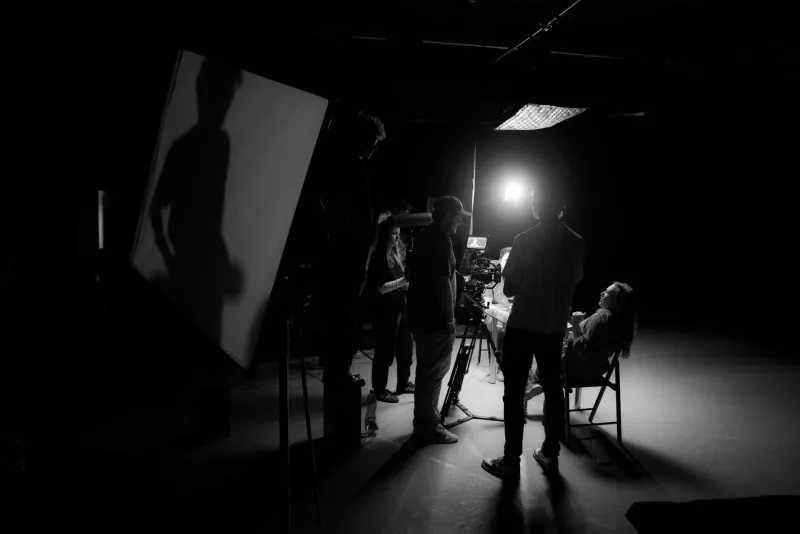
There is a particular cruelty in great filmmaking — a willingness not only to place characters in impossible situations, but to design the space around them so that the audience feels the walls closing in. Scenes of humiliation and defeat are among the most technically demanding a director will ever stage. They require not sympathy alone, but architecture. The wrong camera angle, a blocking choice that grants too much dignity, a cut that arrives a half-second too early — any of these can defuse what should be genuinely unbearable. The directors who get it right are constructing something closer to an experience than a narrative beat.
What separates the merely upsetting scene from the cinematically devastating one is almost always a question of spatial control.
The Body as Trapped Object
Paul Thomas Anderson has long understood that humiliation is fundamentally a spatial phenomenon. When a character is diminished, the geometry of their environment does the diminishing. In Punch-Drunk Love, Barry Egan's eruptions of shame are staged in rooms that seem designed to expose him — wide lenses that flatten his body against expansive, indifferent backgrounds, or tight corridors that compress him without offering shelter. Anderson rarely allows his camera to become a confidant in these moments. It observes, sometimes with an almost clinical remove, which paradoxically heightens the viewer's discomfort.
This is a deliberate refusal of conventional cinematic comfort. Hollywood grammar traditionally grants suffering characters a kind of visual grace — the close-up that asks for our identification, the shallow depth of field that separates protagonist from a blurry, uncaring world. Anderson's instinct is often the opposite: keep the world sharp, keep the character small within it, and let the audience sit with the discomfort of witnessing rather than rescuing.
Proximity as Punishment: The Safdie Method
Josh and Benny Safdie operate from an entirely different but equally rigorous spatial philosophy. Where Anderson tends toward the wide and the cold, the Safdies press the camera uncomfortably close. In Uncut Gems, the scenes in which Howard Ratner's schemes collapse around him are shot with a handheld intimacy that feels almost invasive — the camera lurching, searching, never settling. This restlessness is not stylistic decoration. It is a formal articulation of Howard's psychology: a man perpetually one step ahead of catastrophe, whose defeats arrive not as slow descents but as sudden, suffocating compressions.
The Safdies understand that proximity, in cinema, carries moral weight. To place the camera close to a face mid-humiliation is to deny the audience the comfortable distance of spectatorship. You are not watching Howard fail. You are, in some sense, failing alongside him, caught in the same sweating, frantic frame. The sound design amplifies this — overlapping voices, ambient noise that never quite resolves — but it is the blocking and the camera's physical relationship to the actor that generates the sensation of being trapped.
This technique finds a spiritual predecessor in the work of John Cassavetes, whose long, improvisationally-flavored takes placed actors in states of extended exposure. The camera in a Cassavetes film does not cut away from discomfort; it waits, and waiting is its own form of pressure.
Distance and Dignity: Claire Denis and the Ethics of Observation
Claire Denis approaches the staging of vulnerability from a position that might initially appear more merciful, but ultimately proves equally exacting. In Beau Travail and 35 Shots of Rum, moments of emotional defeat are often rendered through ellipsis and physical displacement — characters filmed from behind, from across a room, through windows. Denis refuses the close-up as a tool of emotional extraction. Her camera does not demand that characters perform their suffering for the audience's benefit.
Yet this distance is not detachment. It creates a different kind of devastation: the feeling that the most significant moments of a person's interior life are occurring just beyond the frame's reach. The viewer is placed in the position of a witness who cannot intervene and cannot fully see — which is, of course, the precise condition of watching someone you care for fall apart in real life.
Denis's compositional restraint has influenced a generation of American independent filmmakers, particularly those working in the post-mumblecore tradition. Directors like Kelly Reichardt have adopted similar spatial ethics, staging defeat in ways that honor the privacy of the suffering rather than aestheticizing it for consumption.
The Architecture of Shame: Blocking and the Loss of Ground
Beyond individual directors, there are identifiable compositional strategies that recur across the best-staged scenes of defeat. One of the most powerful is the progressive loss of spatial dominance — the gradual movement of a character from the center of the frame to its margins, from a position of visual authority to one of visual subordination.
In classical Hollywood staging, the hero occupies the center. When a scene is designed to register defeat, sophisticated directors will subtly relocate their protagonist over the course of a sequence — sometimes through camera movement, sometimes through blocking other characters into positions of visual dominance, sometimes simply by allowing the environment itself to dwarf the human figure. The character does not merely lose an argument or a fight. They lose the frame.
This technique is employed to remarkable effect in the work of Darren Aronofsky, whose staging of collapse in films like Requiem for a Dream and The Wrestler uses both extreme close-ups and sudden wide shots to create a rhythmic alternation between claustrophobia and exposure. The audience is never allowed to find a stable visual relationship to the suffering character — which mirrors the instability of the character's own deteriorating sense of self.
When the Cut Becomes the Cruelty
Editing is the final instrument in this orchestra of defeat. The decision of when to cut away from a scene of humiliation — and crucially, when not to — is as much a moral choice as a technical one. Holding on a face ten seconds longer than comfortable is an act of directorial will. It insists that the audience remain present, that they not be permitted the relief of transition.
Yon González, writing about the editing philosophy of certain European art cinema traditions, has noted that the extended take in scenes of distress functions as a form of ethical demand — the film refusing to let its audience off the hook. American cinema has been slower to embrace this, but the films that have done so most effectively — from Manchester by the Sea to Moonlight — tend to be the ones whose depictions of emotional devastation remain in the cultural conversation long after their release.
The choreography of failure, then, is never accidental. It is the product of deliberate choices at every level of the filmmaking process — choices that, when made with genuine mastery, transform moments of human diminishment into something that expands rather than contracts the viewer's understanding of what it means to be alive and fallible. That is, perhaps, cinema's most demanding and most essential task.